


BASF launches Ecovio F Mulch, a biodegradable plastic material for agricultural mulch films
 InfoWeb Marketplace · Editorial team
Published on 23 February 2013 · 2 min read
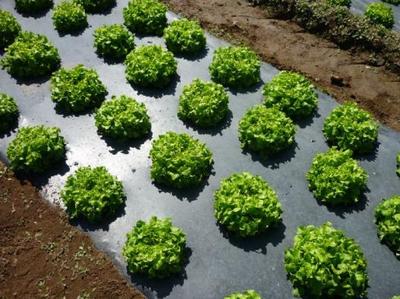
Following its formulations for biodegradable checkout bags, BASF is introducing in its "ecovio" film range a practical and economical solution for agricultural mulching: "ecovio F Mulch".
Numerous experimental stations in France and Spain have tested ecovio mulch films.
Their reports are now available: for long-cycle crops - melons, zucchini, watermelons, squash, processing tomatoes -, a film based on ecovio in 12 ? will be used; for lettuce and other short-cycle crops, mulches in 10 ?.
These thickness reductions bring an undeniable economic benefit compared with biodegradable mulches in 15 ? that are considered costly.
Ecovio F Mulch offers the farmer practical and economic advantages
The "ecovio" material is made of BASF's "ecoflex", mineral fillers and polylactic acid (PLA), a renewable raw material derived from corn
. "Ecoflex" makes the film flexible and tear-resistant, while polylactic acid increases its puncture resistance and provides the renewable raw material.
Chemically speaking, "ecoflex" is a BASF polyester of petrochemical origin. But, thanks to its special molecular structure, it too can be digested by micro-organisms.
"Ecovio" is fully biodegradable under European standard EN 13432.
Biodegradability as a complement to material recycling
Recycling is currently the most common solution for disposing of used agricultural films. But this practice entails additional labor and energy costs for the farmer in order to supply a raw material acceptable to recyclers.
Several reports show that with thin films such as mulch, the final product leaving the field contains around 75 to 80% of dirt (soil, plant matter, moisture).
This waste must then be transported with the film to the nearest recycling plant, then brushed, washed, shredded, dried and melted to obtain granules of sometimes mediocre quality despite the quality of the original resin.
In addition, there is the APE contribution for collection and recycling, which, for mulch, increases year after year.
Thanks to BASF's "ecovio", biodegradability is now the solution best suited to the work of farmers and horticulturists as far as mulching is concerned. Many of them had had a positive experience with it in the past, but its cost still needed to be improved.
This is now possible with the arrival of "ecovio", which makes it possible to reduce the thickness of biodegradable mulch films for the same result.