


BASF launches Tessior® System, a new solution in line with agroecology
 InfoWeb Marketplace · Editorial team
Published on 3 December 2018 · 3 min read
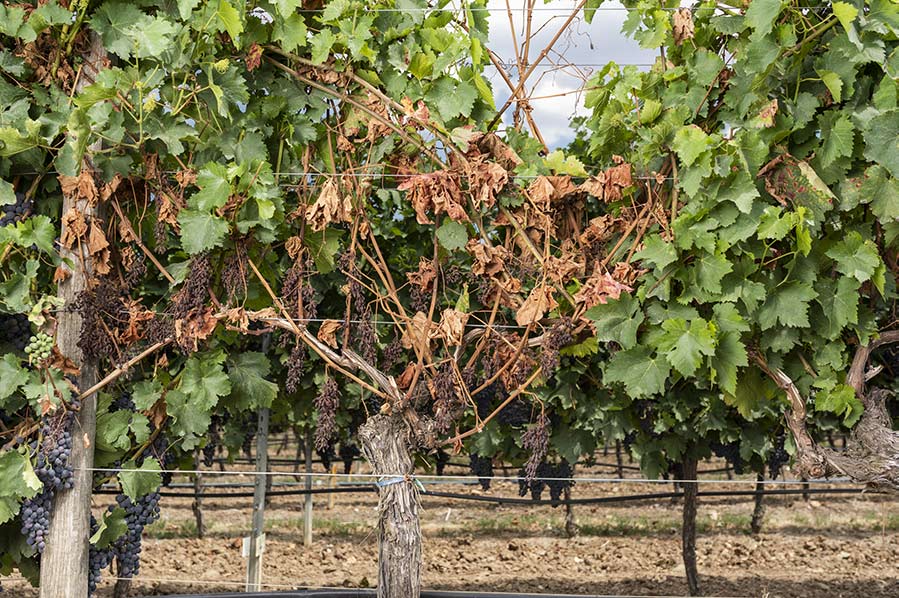
BASF launched a major research project in 2005 that has led to the development of a solution offering real progress, which can be used as early as this winter. It represents genuine hope for winegrowers, who will finally be able to fight grapevine trunk diseases effectively.
Double protection, physical and chemical
Grapevine trunk diseases are caused by a large number of fungi that infect vines year after year, notably through contamination at pruning wounds.
On fresh cuts, fungal spores settle, germinate and infect the trunks through mycelial colonization, gradually decomposing the wood.
The Tessior® product is particularly well suited to the challenges of trunk diseases. Its design provides double protection, both physical and chemical. This physical protection, similar to a bandage, protects the pruning wound to limit the entry of spores, which are the source of contamination.
It is based on a polymer present in an aqueous solution, which, once sprayed, forms a solid protective film on the surface of the wound created by pruning. The chemical protection, for its part, comes from the presence of two fungicidal substances, pyraclostrobin and boscalid, which have a broad spectrum and effectively combat the 4 major and pioneer pathogens responsible for trunk diseases.
The chemical protection controls spores that may have settled on the pruning wound between pruning and the application of Tessior. Tessior® is a preventive product intended to prevent contamination. It must therefore be applied to young vines, from the 1ère pruning after planting, or to vines less than 7 to 8 years old showing few or no symptoms.
The application will be repeated every year at each pruning period, until the point when uprooting the vineyard is considered.
Tessior® is intended for vineyards with no apparent symptoms, which it will protect from the progressive infections generated during annual pruning. Tessior® is not curative, so it has no effect on infected vines in which the disease is well established.
A smart application tool: the right dose, at the right time and in the right place
The application of Tessior on wounds must be precise to ensure effective protection. To develop an application tool suited to the issue of pruning wounds for its new solution, BASF formed a close partnership with the German company MESTO and the pruning tool manufacturer FELCO.
Lightweight and designed as a backpack device, the Tessior® application tool, both technological and practical, combines precision and ergonomics, at a cost that is affordable for wine estates.
The applicator gun makes it possible to adjust the dose to different types of pruning wounds, with preset dosages from 0,15 to 0,3 milliliter per spray. The product is used undiluted and can be applied at temperatures down to -5°C. It is therefore suitable for application during the vine pruning period, which runs from December to March.
With Tessior®, if you can prune, you can treat!
This new concept is an essential complementary piece in the holistic approach required to fight trunk diseases. To have a sustainably healthy vineyard, the winegrower must plant the healthiest possible vines, taking care to remove from the environment of the young vineyard any diseased plants previously uprooted.
They must also choose an appropriate pruning method that respects sap flow, avoid heavy short pruning and keep long wood, leave spurs (Poussard Guyot pruning), prune in dry weather where possible and protect pruning wounds as early as possible.
With Tessior® System, the fight against trunk diseases takes an important step forward, offering vineyards prospects of sustainability, a guarantee of quality and quantity of harvests (preserving all vines, which retain their productivity and provide grapes of consistent quality)
Cooperating to develop agroecology
This innovation is an example of a successful partnership. When the project started, there was no method to measure the effectiveness of the products tested.
BASF then reached out to the best European researchers on trunk diseases to develop with them a shared and relevant methodology, which made it possible to compare the solutions tested and to develop the product with the best assets for controlling the fungi involved.
Next, a solution had to be found to implement the most effective formulation which, owing to its very special characteristics, cannot be applied with conventional equipment.
By pooling the know-how of BASF, a chemistry leader, with that of agricultural equipment experts, a solution suited to growers' needs could be developed.
Trials conducted in many European vineyards with researchers from scientific institutes, technicians from equipment manufacturers and winegrowers revealed the high efficacy and safety of the solution thus developed.
Developing such an innovation was only possible thanks to the dynamic cooperation of several companies, each holding part of the solution.