


Editorial team · Specialized crops
 InfoWeb Marketplace · Editorial team
Published on 30 August 2019 · 2 min read
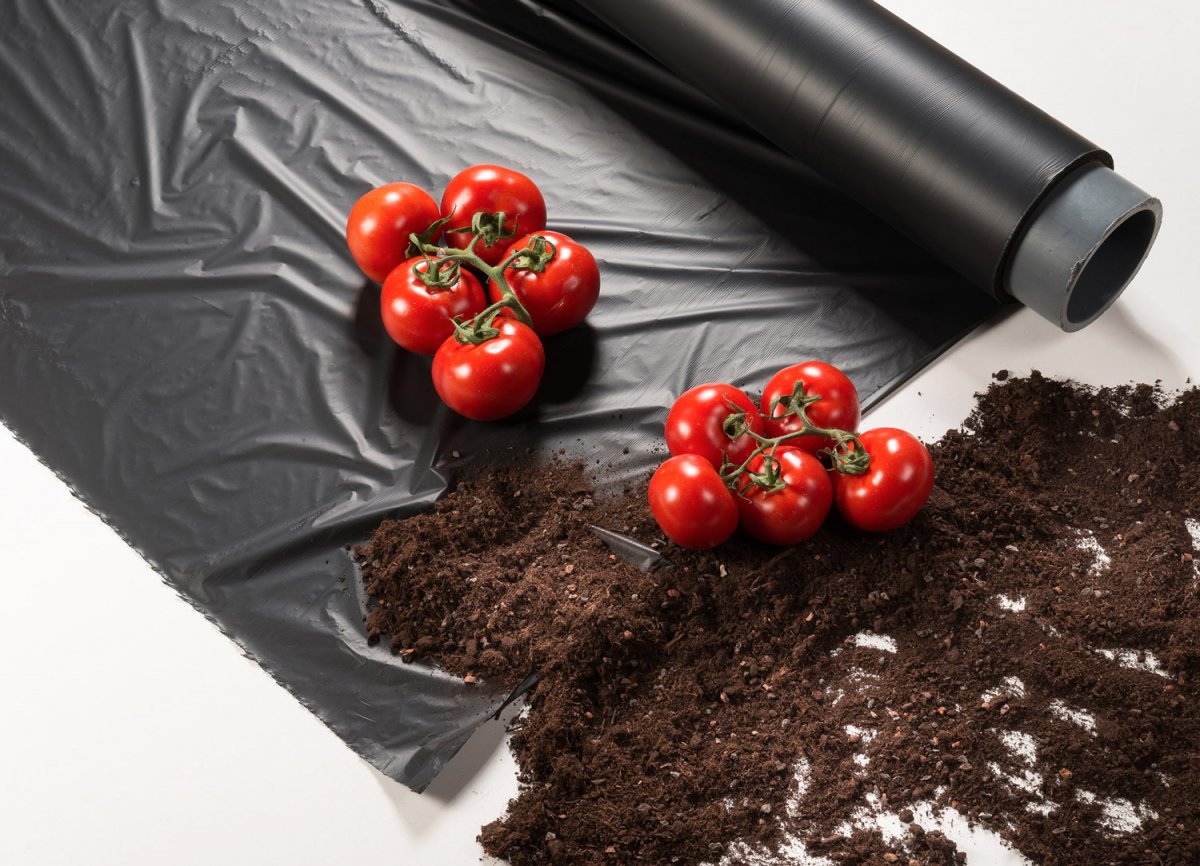
BASF's certified biodegradable ecovio®M2351 mulch film offers benefits for vegetable crops and the environment. Tomatoes are the most widely grown vegetable in the food industry. In many countries, polyethylene (PE) mulch films are used to increase crop yields because they limit weeds and regulate soil temperature and water consumption. However, these PE films must be removed from the field after harvest. As it is often impossible to recover them completely, PE residues enter the soil and accumulate there because microorganisms are unable to degrade them.
With ecovio®M2351, BASF offers a plastic certified as biodegradable in soil for crop mulching, made of the biodegradable copolyester ecoflex® based on polybutylene adipate terephthalate (PBAT) and other polymers made from renewable and biodegradable raw materials. Mulch films made of ecovio® M2351 can be tilled into the soil after harvest, since the microorganisms naturally present in the soil metabolize the components of the film structure. In addition, ecovio® films can increase tomato yields by 15 to 20%, reduce water consumption, limit weed growth and thus reduce herbicide application, compared with farming on bare soil. Vegetable growers have also observed greater plant resistance to fungal diseases, earlier harvests, more uniform tomato quality and a higher Brix level, meaning a better ratio of sugar to water in the tomatoes. It is thus possible to combine sustainable agriculture with high-performance vegetable production, with higher yields and superior-quality products.
Without the burden of laborious removal and recycling, ecovio®M2351 films can stay in the soil after harvest, which saves labor and costs. A study by ETH Zurich, Switzerland, shows that soil microorganisms, such as bacteria and fungi, can feed on films based on the biodegradable copolyester ecoflex® (PBAT). These microorganisms convert the carbon in the polymer into energy and biomass. After biodegradation, only CO2, water and biomass remain. As a result, PBAT is biologically degraded in the soil and does not remain there as microplastic, unlike PE.
Soil-biodegradable ecovio®M2351 mulch films therefore contribute to better plant rooting, better crop growth and better soil quality. ecovio® M 2351 is the first material certified as soil-biodegradable according to the European standard DIN EN 17033. The use of ecovio® mulch films is also permitted for organic farming in many countries. Farmers have been using ecovio® biodegradable mulch films since their market launch in 2012: ?We encourage farmers to use ecovio® mulch films?, says Dirk Staerke, Marketing Manager Biopolymers for Agriculture at BASF.
BASF's ecovio® M2351, a Certified Biodegradable Mulch Film
InfoWeb Marketplace · Editorial teamPublished on 30 August 2019 · 2 min read
Preserved Soil, Higher Yields and Tastier Tomatoes Thanks to ecovio®M2351
BASF's certified biodegradable ecovio®M2351 mulch film offers benefits for vegetable crops and the environment. Tomatoes are the most widely grown vegetable in the food industry. In many countries, polyethylene (PE) mulch films are used to increase crop yields because they limit weeds and regulate soil temperature and water consumption. However, these PE films must be removed from the field after harvest. As it is often impossible to recover them completely, PE residues enter the soil and accumulate there because microorganisms are unable to degrade them.
With ecovio®M2351, BASF offers a plastic certified as biodegradable in soil for crop mulching, made of the biodegradable copolyester ecoflex® based on polybutylene adipate terephthalate (PBAT) and other polymers made from renewable and biodegradable raw materials. Mulch films made of ecovio® M2351 can be tilled into the soil after harvest, since the microorganisms naturally present in the soil metabolize the components of the film structure. In addition, ecovio® films can increase tomato yields by 15 to 20%, reduce water consumption, limit weed growth and thus reduce herbicide application, compared with farming on bare soil. Vegetable growers have also observed greater plant resistance to fungal diseases, earlier harvests, more uniform tomato quality and a higher Brix level, meaning a better ratio of sugar to water in the tomatoes. It is thus possible to combine sustainable agriculture with high-performance vegetable production, with higher yields and superior-quality products.
Day-to-Day Benefits on Farms in Support of Sustainable Agriculture
Without the burden of laborious removal and recycling, ecovio®M2351 films can stay in the soil after harvest, which saves labor and costs. A study by ETH Zurich, Switzerland, shows that soil microorganisms, such as bacteria and fungi, can feed on films based on the biodegradable copolyester ecoflex® (PBAT). These microorganisms convert the carbon in the polymer into energy and biomass. After biodegradation, only CO2, water and biomass remain. As a result, PBAT is biologically degraded in the soil and does not remain there as microplastic, unlike PE.
Soil-biodegradable ecovio®M2351 mulch films therefore contribute to better plant rooting, better crop growth and better soil quality. ecovio® M 2351 is the first material certified as soil-biodegradable according to the European standard DIN EN 17033. The use of ecovio® mulch films is also permitted for organic farming in many countries. Farmers have been using ecovio® biodegradable mulch films since their market launch in 2012: ?We encourage farmers to use ecovio® mulch films?, says Dirk Staerke, Marketing Manager Biopolymers for Agriculture at BASF.
Advertisement